Verizon Fios Stream / TV+ Review
Verizon's streaming-style cable platform — the path Verizon is steering new customers toward instead of Fios TV One.
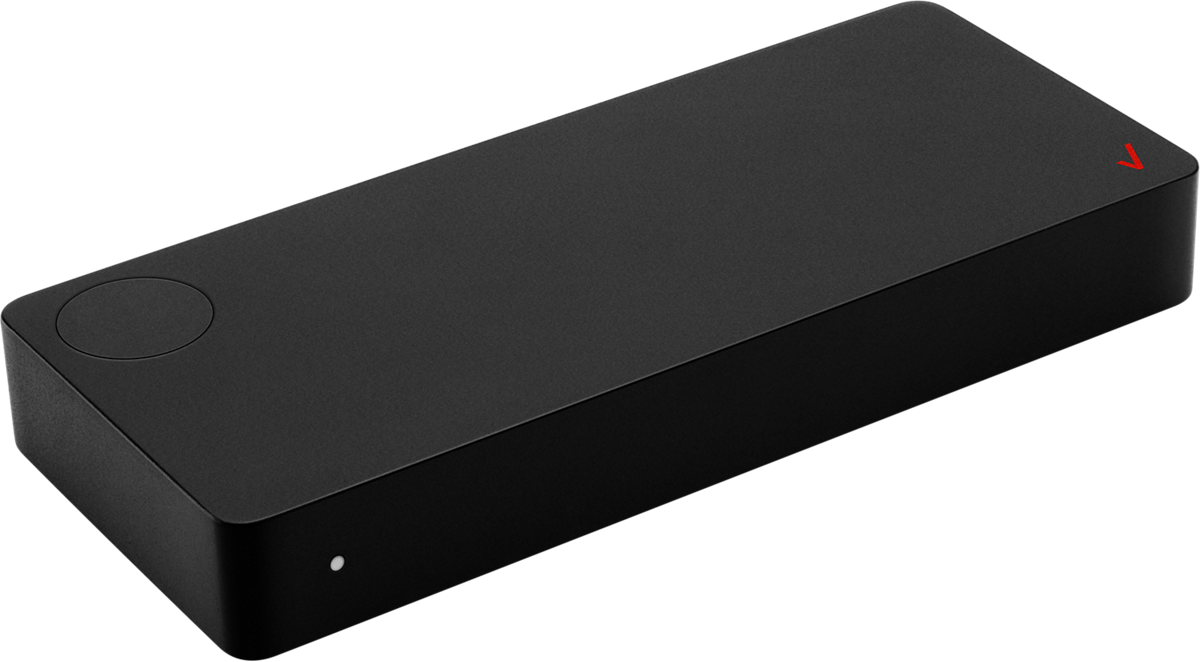

Our Take
After installing both Fios TV One and Fios Stream in clients' homes, my honest take is that Fios Stream is the platform Verizon is steering new customers toward — and for many households, it's the right call. The box is smaller. The MoCA network is gone. The two-remote, two-input frustration that defined Fios TV One is largely solved. The interface is faster. And the built-in streaming apps story is meaningfully better than the legacy Fios TV One platform.
The catch is the channel lineup. Fios Stream carries a meaningfully leaner package than Fios TV One. Local sports channel coverage is the place this hits hardest — some regional sports networks that are reliable carry on Fios TV One are missing or replaced with streaming-app substitutes on Fios Stream. For households where the team plays on a local sports channel that isn't in the Stream bundle, the platform isn't actually an upgrade.
The other catch is Wi-Fi reliability. Fios Stream is Wi-Fi delivered. If your home Wi-Fi is solid, this is a non-issue. If your Wi-Fi has dead zones or marginal coverage where the TV is, you'll feel it during big games and live events.
Whether Fios Stream is the right call depends on the specifics: whether the Stream bundle carries what you watch, whether your Wi-Fi is robust, and whether you're willing to trade the legacy platform's full lineup for the modern interface.
The biggest daily frustration — the channel-lineup gap
The thing that wears Fios Stream households down faster than anything else isn't the hardware or the Wi-Fi. It's discovering the channel they used to watch on Fios TV One isn't on Fios Stream.
The platform looks like a clean upgrade on paper — fewer remotes, faster guide, better apps. Then someone in the household tries to watch a regional sports broadcast or a specific channel they relied on, and it's not there. Fios Stream carries the broad cable lineup but cuts deeper into the regional and specialty tiers than Fios TV One does.
I've had clients switch to Fios Stream, discover three weeks later that a channel they used to watch isn't carried, and either accept the loss, switch to a third-party streaming service for that one channel, or move back to Fios TV One. It's not a hardware problem — it's a bundle problem. The right move is to audit your channel lineup BEFORE switching. Print out the Stream package channel list, compare it to the channels you actually watch (check your DVR history for the last 60 days — that's your real channel usage), and confirm everything you actually watch is in the bundle.
When to keep / switch to Fios Stream
You're a new TV customer and Verizon is pushing Fios Stream. Fios Stream is what Verizon is pushing for new customers. For most households this is the right call — modern interface, real app integration, smaller monthly cost than Fios TV One when comparing equivalent tiers.
You're tired of the Fios TV One two-remote, two-input dance. This is the most common reason existing Fios TV One customers switch. Fios Stream has built-in apps (Netflix, Prime, Disney+, Max, Hulu, Apple TV+, YouTube) so the input-switching mostly goes away.
Your channel needs are covered by the Stream bundle. Audit before you switch.
Your Wi-Fi is reliable mesh or wired backhaul. Fios Stream's Wi-Fi delivery works when the Wi-Fi is solid. With Fios Gigabit Internet behind a modern eero or Orbi mesh, this isn't a concern.
You have one or two TVs. Fios Stream's smaller box and Wi-Fi delivery makes installing on a secondary TV trivial — no coax drop needed.
You use streaming apps daily. The built-in app integration is the real Stream advantage over Fios TV One.
When to skip Fios Stream / keep Fios TV One
You depend on local sports channels (YES, MSG, NBC Sports, etc.) that Fios Stream doesn't carry. Verify this. Fios Stream's regional sports coverage is narrower than Fios TV One's in some markets.
Your Wi-Fi has dead zones or marginal coverage at the TV. Streaming-style delivery on bad Wi-Fi is a daily friction. Coax-based Fios TV One doesn't have this problem.
You're a heavy DVR user (100+ hours/month). Fios Stream's cloud DVR is smaller than Fios TV One's local DVR.
You have four or more TVs and Fios TV One's first-box-free policy already serves you well. Run the math; don't assume.
Key features (and what they actually mean for you)
The box — small, Wi-Fi, no MoCA
Fios Stream is a small box (roughly puck-sized) that plugs into your TV's HDMI port and connects via Wi-Fi or Ethernet. No coax connection. No MoCA network.
🧠 Why this matters: the MoCA fragility that affects Fios TV One installs — periodic resets, occasional lost recordings, full reinitializations every 6–8 months — is gone entirely. Fios Stream is closer architecturally to a Roku or Apple TV than to a traditional cable box.
The remote — clean
The Fios Stream Voice Remote is cleaner than the Fios TV One remote. Fewer buttons (~15 vs the 30+ on the TV One remote). Voice search across cable and built-in streaming apps. RF for the box, IR for TV control.
📡 Why RF beats IR for cable boxes: no line-of-sight required. The Fios Stream box can sit behind the TV or in a cabinet — the remote still works.
Channel lineup — meaningful gap vs Fios TV One
Fios Stream carries 125–175 channels depending on tier. Fios TV One carries 245+. The difference is mostly in the deeper cable tiers (specialty channels, some regional sports, some international packages).
🏈 Why this matters: verify local sports channel coverage. Fios Stream's RSN coverage is narrower than Fios TV One's in some markets. If YES Network, MSG, or NBC Sports regional carriage matters to you, confirm before switching.
DVR — cloud, smaller than Fios TV One
Fios Stream's cloud DVR holds 50–100 hours depending on tier. Fios TV One's local DVR holds 200 hours of HD. Multi-room playback works through the Fios app on Stream.
⚠️ The honest caveat: cloud DVR retention applies — typically 12 months, with some content removed for licensing reasons. Heavy DVR users may feel the storage constraint.
Built-in streaming apps — meaningful upgrade over Fios TV One
What's actually built in:
- ✓ Netflix
- ✓ Prime Video
- ✓ Disney+
- ✓ Hulu
- ✓ Max (HBO)
- ✓ Apple TV+
- ✓ YouTube
- ✓ Peacock, Paramount+, Pluto TV, Tubi, and a few dozen more
What's NOT built in:
- ✗ YouTube TV (direct competitor)
- ✗ Sling TV (similar reason)
🎮 What this means in practice: Fios Stream's app story is the meaningful upgrade vs Fios TV One. Live cable + every major streaming app on the same remote and the same HDMI input. The two-remote, two-input dance that defined the Fios TV One experience is largely solved here.
The remote — modern by cable standards
| Remote feature | Fios Stream Remote | Roku Voice Remote Pro 2 | Apple Siri Remote |
|---|---|---|---|
| RF / Bluetooth — hide the box | ✓ RF | ✓ Bluetooth | ✓ Bluetooth |
| Voice search across channels and apps | ✓ Excellent (cable + all built-in apps) | ✓ "Hey Roku" hands-free | ✓ Siri (press to talk) |
| Controls TV power, volume, input | ✓ IR | ✓ Most TVs | ✓ Built-in IR + CEC |
| Headphone jack on remote | ✗ | ✓ | ✗ |
| Lost-remote finder | ✗ | ✓ | ✗ |
| Backlit buttons | ✗ | ✓ | ✗ |
| Button count | ~15 (much cleaner than Fios TV One) | ~12 | ~7 |
| Battery / charging | 2× AAA (~6 mo) | Rechargeable USB-C | Built-in rechargeable, USB-C |
The Fios Stream remote is the cleanest remote Verizon has shipped. Voice search works across cable AND built-in apps. RF works through cabinets.
What it isn't is full-feature like the Roku Pro 2. No backlight, no headphone jack, no remote finder. Standard streaming-cable remote.
Closed captions, parental controls, and accessibility
Solid. Captions fully customizable under Settings → Accessibility. ADA-compliant. Parental controls PIN-locked at the box level. Audio descriptions and screen-reader support available.
Box rental costs (you cannot buy them)
Fios Stream is rental-only. The first box is typically included free with the TV bundle. Additional Stream boxes for secondary TVs rent for ~$5–$10/month each.
| Per box | Per year | 5-year cost | |
|---|---|---|---|
| First Fios Stream box | Included free | $0 | $0 |
| Each additional box | ~$5–$10/month | $60–$120 | $300–$600 |
| Typical 2-TV setup | ~$5–$10/month | $60–$120 | $300–$600 |
| Typical 4-TV setup | ~$15–$30/month | $180–$360 | $900–$1,800 |
💡 The math that actually matters: Fios Stream's additional-box pricing is cheaper than Fios TV One's $12/month. A four-TV Fios Stream household pays roughly half what a four-TV Fios TV One household pays in box rentals.
The three real options compared
Numbers below are for a typical two-TV setup on Gigabit Internet:
| Item | Keep Fios TV One | Switch to Fios Stream / TV+ | Cut TV — keep Internet only |
|---|---|---|---|
| Internet | $89.99/mo | $89.99/mo | $89.99/mo |
| TV service | $109.99/mo | $89.99/mo | — |
| Box rental (2 TVs) | $12/mo (1st free, 1 add'l) | $5–$10/mo | — |
| Fees & taxes | ~$18/mo | ~$10/mo | ~$3/mo |
| Replacement service | — | — | $82.99/mo (YouTube TV) |
| Monthly total | ~$230/mo | ~$195/mo | ~$176/mo |
| Channel count | 245+ | 125+ | 100+ (YouTube TV) |
| Local sports channels | Full | Partial — verify per market | Usually missing |
| DVR | 200 hr local | 50–100 hr cloud | Unlimited cloud |
| Reliability | Coax-reliable, MoCA-fragile | Wi-Fi dependent | Wi-Fi + service dependent |
| Remote / inputs | Two remotes, two inputs | One remote, one input | One remote, one input |
| Service calls | A few per year typical | Rare | Rare |
Fios Stream is cheaper than Fios TV One AND solves the two-remote, two-input problem. The catch is the channel lineup gap — especially for sports-heavy households. Cutting the cord entirely is cheaper than both but trades full channel coverage for unlimited cloud DVR.
What's missing
Full channel parity with Fios TV One. The Stream lineup is meaningfully smaller. Specialty channels, some regional sports networks, and deeper cable tiers are cut.
Coax-grade reliability. Wi-Fi delivery means Wi-Fi-quality results. Big-game households should test before switching.
The local DVR storage Fios TV One offers. Cloud DVR is smaller and has retention limits.
A purchase option. Rental-only through Verizon.
Who this is best for
Best for new Fios TV customers. Stream is the modern interface; Fios TV One is the legacy platform. New installs should start here unless channel coverage gaps push you to TV One.
Best for households worn down by the Fios TV One two-remote dance. This is the platform that fixes that.
Best for households with reliable Wi-Fi and one or two TVs. Plays to Stream's strengths.
For everyone else — sports households depending on local sports channels Stream doesn't carry, marginal-Wi-Fi homes, heavy DVR users — Fios TV One or YouTube TV is worth real consideration.
Prices vary by market. The best way to see exactly what you'd pay across all three options is to run the quiz with your ZIP code — we'll show you real numbers for your address.
More photos
Where to rent
Boxes are rental-only — you cannot purchase them. Rate is per box, per month, billed by Verizon as part of your service.
Setup tips from a pro installer 8 tips · click to expand
- Audit your channel lineup before signing Fios Stream's channel count is materially smaller than Fios TV One's. Verify your favorite channels (especially local sports channels — YES, MSG, NBC Sports, etc.) are in the bundle before switching. Some major regional sports networks aren't on the Stream lineup.
- Hardwire if you can Fios Stream has Ethernet. Use it. Wi-Fi delivery works but a wired drop eliminates the most common 'buffering during big games' issue. The box is small enough that running a short ethernet cable is easy.
- Set up DVR priorities on day one Fios Stream's cloud DVR is smaller than Fios TV One's local DVR. Configure series-record priorities the day of install so the box catches the right shows from day one.
- Activate built-in streaming apps Fios Stream has more native apps than Fios TV One — Netflix, Prime, YouTube, Disney+, Hulu, Max, Apple TV+ all present. Sign in to what you already pay for during install.
- Adjust audio output for soundbar Settings → Audio. Pass-through Dolby Digital sends full audio signal to your soundbar or AVR. Default is sometimes stereo.
- Use the Fios mobile app for second-screen viewing Modernized vs the Fios TV One app. Streams live channels and recordings to phones and tablets at home and away.
- Customize the home screen ordering Push your most-used apps to the top so the home screen feels like yours, not a generic carousel.
- Know how to call retention Verizon's pricing is negotiable. If your bill creeps past competitive new-customer rates, call retention. Veteran clients save $20–$50/month by calling once a year.